Idea searching

Creating art is such an impossible thing to describe. How does one explain the genesis of the fantastic world she’s painting, or the witty characters she’s chronicling the adventures of?  Where do our ideas come from?

And, perhaps more importantly, where do we go to find them again when they’ve fluttered away?

For me, the first priority is always music. Although I’m distracted by coffee shop chatter, I’m never annoyed by music. In fact, sometimes a song hints at a new story for me and I’ll listen to it on repeat for an hour as the idea bubbles to the surface. I have playlists for all my characters.

But, some days, even music can’t shake my creativity awake. In that case, I’ll go for a run, exercising my physical muscles in the hopes that my mental muscles will soon respond.

If that fails, then I curl up with a mug of tea and some knitting, totally admitting defeat in the quest for words for the day. But that doesn’t happen too often. Plus, within an hour of some caffeine and some mindless knitting, my brain is almost always ready to go with new ideas.

Other writers I know have certain teas they always drink when they’re writing, or a candle they light before they sit down to type. Some swear by browsing Pinterest for a while, letting ideas percolate. The ancient Greeks used to summon a muse with words, incantations and rituals. A famous author I follow on Twitter once admitted to trying to tell the story to his dog, verbalizing the plot points as they happened.

I don’t think there’s a wrong way to find new ideas. Every new way might promote new ideas!

Fears and Self-doubting in the Creative World

Hi all!

Short blog post is short, but will be leading into a longer one. If you read this blog, you’re probably a creative person. Or my mom. (hi, Mom!) and if you’re a creative person, you’ve probably felt doubts. Fears. The ever lurking shadows of failure.

tumblr_mjf5njdqPX1rj7m2no1_500

The rejections and bad feedback that makes you feel awful. The people who look at your art and say “I don’t get it.” The review of your band that calls it worse than drunks at karaoke. You know, the non-fun part of being creative.

tumblr_n3l5xocQDS1qbxi45o1_500

But those insidious whispers are WRONG. You are talented. You are amazing. You make good art and you make the world a better place. Everyone is cheering you on, and the world is waiting to meet you. There are so many good things ahead in your creative journey. Keep going. You can do it!

cheer

Here’s the thing. We all get those feels. And I’d like to think, just maybe, if we talk through them, together but anonymously, maybe we can get some things off our minds, and go back to making beautiful art.

To me, Rumple is beautiful art. Disagree, fine.

To me, Rumple is beautiful art. Disagree, fine.

So, on my tumblr, http://writercarrieann.tumblr.com/ask I’ve opened up to anonymous asks. I’ll leave it that way for about a week, and in that time, share your fears, your doubts, your moments of “OMG, I’m a fraud,” your cat’s name, your belief that Rumple/Belle is the best thing ever… okay. Maybe not the last two. But please, share your fears-no matter where you are, published, just starting out, a dancer or a knitter. I bet someone else is feeling the same one. All the fears will be condensed into one post, so you will be totally, totally anonymous.

Unless your fear is that Belle will never forgive Rumple. Then everyone will know that one’s me.

You’re not alone, and in a follow up post, I’ll try and address these fears. We are stronger together, and even stronger when we talk.

Business of Art Interview: K. Kazul Wolf

So, it’s time for another Business of Art interview, and I couldn’t be more thrilled to introduce K. Kazul Wolf, a writer as well as a professional chef! Her creativity amazes me and her story prompts are a great way to beat writer’s block. They are posted every week on her Tumblr.

AuthorPic03

 Hi! Tell me a bit about yourself?

Hallo! My penname may be K. Kazul Wolf, but most people call me Bacon. My day job is a chef-who-turned-baker at a four diamond restaurant in the Finger Lakes of New York, and then I come home to my crazy house of two dogs, too many cats, and chickens who also think they’re cats. Otherwise, I’m a fantasy author that talks too much about dragons.

How long have you been writing? What do you love about writing?

I’ve only been writing for about five years, give or take. I was kind of a late bloomer with both reading and writing — I couldn’t care less about reading until I picked up either Harry Potter or The Lion, The Witch, and the Wardrobe (it’s the chicken and the egg, I have no idea which really came first) when I was ten, and couldn’t figure out what I wanted to do with my love of creating worlds until I was eighteen.
As to what I love about writing: I love creating. There’s nothing I love more than to weave any medium into something beautiful, or emotional — something that makes you feel. Writing is perfect for that.

I loved the Narnia books too! What other books are among your favorite?

Ohhhh, that’s such a hard question! My top to go-tos, though, are: Howl’s Moving Castle by Diana Wynne Jones, and The Daughter of Smoke and Bone Trilogy by Laini Taylor. No one can ever beat Diana Wynne Jones’s world-building and plot complexity, and Laini Taylor is absolutely beautiful in her prose.

What’s the best writing advice you’ve ever heard?

This is going to sound lame, but simply: write. Yeah, we all have moments of doubt, but those insecurities you feel are felt by every single author out there. If you don’t push through them and get the stupid words out, you won’t have written, and you won’t be a writer. So, yeah. WRITE.

I couldn’t agree more! Doubt sneaks into every writer’s brain. Tell me a bit about the projects you’re working on now.

Well, I’m coming to an end to my year-long project, where I take prompts every week and write a short story involving all of them (more about this over here). And as for my WIP novel, I conveniently have a rough query:

Emma wakes up to a man with black eyes and razor-pointed teeth hovering over her, in a strange house, an even stranger land. She can’t even try to run; the town she’s in is surrounded by a ward that keeps out a seething darkness of eaters — formless remains of people who have lost their souls, and will do anything to get another. But even that doesn’t compare to the fact that she can’t even remember who she was before she woke up.

The monster-man, Bob, and the owner of the house, a Magician named Morgan, seem nice enough, though the sink like a bottomless pit, an oven that likes to shoot its racks at unsuspecting victims are a little hard to swallow. There’s no solace outside — the townsfolk blame her for the infestation of monsters, and it’s only Morgan and Bob keeping her safe. Emma can’t understand what motivates them to help her, what’s in it for them and what they want from her. The truth is a tricky thing when you can barely remember your own name.

That query sounds intense! Can’t wait to read the story! You mentioned you’re a professional chef, which is awesome! Do you find your culinary expertise influencing your writing?

Yes! You have no idea how much I annoy my friends with cooking metaphors. For awhile I stayed away from food in my own writing, but looking back, I don’t know why. Who doesn’t love food? On the level of similarities between the two, there’s actually a lot, especially with baking. It takes patience, precision and practice. You’re not going to start off icing wedding cakes like a pro, or cooking tenderloins to a perfect medium-rare, or  cutting perfect tourne (those are evil). And there’s always more to learn, and always different ways to perfect your style and taste.

One of the features of my blog is “the business of art” In your life, have you encountered any challenges or confusion relating to business matters and your art?

Oh gosh, yes. As a writer, I could complain about having to be a small business and brand onto myself until I’m blue in the face, but I that’s something other people can cover way better then me. As a chef, it’s a little different. Just like the literary industry, it’s very unique, and it can be hard to break into the fine dining side of things. Especially as a woman. I actually had training and classes on a very nice culinary resume before applying to culinary jobs. Even with all that, one of my first interviews the man kept asking me, “But you’re so pretty, don’t you want to be a waitress?” I wouldn’t have accepted the job, even if it was offered. And as a vast contrast to querying vs. job applications, this was personal. It wasn’t that I wasn’t a right match, it was that I was a girl.
That being said, I got my first fine dining job at a great restaurant on the second day of a stage (unpaid internship), when the head chef came up and asked if I wanted a be hired as a garde manger. Being the quiet introvert on top of being a girl, it’s a hard place to be taken seriously even if I have all the skills. It’s sad that there’s still so much sexism in the culinary field (oh the irony with all the kitchen jokes), but that doesn’t mean it should stop you from trying to do what you want to do.
Thank you so much for a great interview (and for making me hungry. Mmm cake.)

If you’d like to find out more about K. Kazul, here are her homes on the ‘net.

A Thank You to the Writing Community

I’ve always been a writer, but aside from classes, I’ve never shared my writing with anyone other than my long-suffering best friend.Then, a little over a year ago, I realized the story I’d been drafting was something I really, really loved, and wanted to share with other people, maybe even see in print someday. It had been years since I’d declared myself “a writer” to anyone, but, it was time.

So, I hit up Google  for writing sites. Absolute Write, Ladies Who Critique, and Maggie Stiefvater’s annual CP love connection. I met amazing critique partners, who encouraged me to keep writing. They saw potential in the messy, plot-less draft I’d created.

As summer turned to fall, my writing picked up steam, and I was selected for the Pitch Wars mentoring contest, and gave me a whole new network of awesome writing friends. Between that, joining SCBWI, spending (too much?) time on twitter, and crashing in on Nanowrimo meetups, I met even more awesome writers. Seriously, if you’ve ever considered doing any of those things, try it out. You never know who you might meet.

Then an amazing thing happened. The more I interacted with the writing community, the stronger my writing grew. Even more valuable than the editing and writing tips is the sense of fellowship, that bolsters  me on rough days, and cheers with me on great days.  I ‘m not alone anymore, writing stories for only me  and my cat.

This is a thank you to all the writers and creative folk I’ve met so far. Loyal critique partners who will brainstorm plot twists and listen to my rambling tangents, incredible beta readers who offer feedback on the manuscript as a whole, and the hundreds of people I’ve interacted with on Twitter and Tumblr.

I’ve even been lucky enough to meet a few of you in real life.

Your kind encouragement helps me through days when writing a novel seems impossible. Your thoughtful feedback sharpens the story from the vague draft it was into something sparkling. The way you fangirl (or fanboy )over my characters re-ignites my own enthusiasm for them. Your sympathetic ear when real life explodes and writing seems impossible makes the struggle to get words on the page easier. Your joy at my success makes it ten times more awesome.

You have no idea how much you matter.

Risk and Reward

So, this is one of those businessy posts, but I’ll be applying it to creative endeavors. I also promise fun Disney metaphors and gifs at the end.

In the business world, you’re taught most choices can boil down to a simple formula. The greater the risk, the greater the reward.

To simplify, you stand a better chance of winning the lottery if you spend the money on a ticket (please note, that’s not financial advice to place the lottery.) But, your risk is that you’re out the cost of the ticket.

Similarly, if you want the reward of feedback on your creative work, your art, your knitting, your sassy cross-stitch, your writing, you have to risk getting it rejected.

And if you want the reward of growing your craft and achieving your dreams, you have to risk a lot of rejection.

A lot.

You can only show your work to your best friend and your grandma, and never hear a word of negative feedback, but you’ll never have a fan you’ve never met gush about your work, or meet someone who challenges you to Art Harder as the awesome Chuck Wendig says in his post here.

original

Risk versus Reward applies to everything.
 

Publishing options? Self Publishing is All the Risk. All the Reward. If you succeed, you’ll basically get all the financial reward of the work, But you also take on all the risk. The risk of marketing, the risk of editing and not misspelling the word “public” in the most tragic way…

Traditional publishing is on the other end . You don’t have as much risk. Someone else is editing your work, spell-checking your typing, designing your cover, all so that you don’t have to take on that risk. But you do lose some of that reward, both financially, and in the sense that you can’t point to the cover and say, “Me. I did that!”

Neither of these approaches is wrong. There’s no perfect risk/reward level that everyone should work towards. We’re all different people, and we all have different risk tolerance levels.

Disney metaphor, as promised!

Some people aren’t risky, at all. They  know what they like, and they’re happy with that. They might create art, but they also may never share it with anyone. For them, big rewards, aren’t worth the risk.

belle

Some people are driven and brave and perhaps just a little bit wild. They’re willing to work hard, create art, and make a market for it. They’re aiming for big rewards, and willing to take on big risks.

brave

And there’s the people who might need a nudge. They art. They art well.  They dream of big rewards, of Hollywood lights and hardcover books, but they’re so afraid of the risks that they can’t even think about sharing.

tumblr_inline_mpn0dprsbp1qz4rgp

Their fear of the risks has grown larger than the risk itself. If you find yourself in this category, maybe…just maybe, take a leap of faith. Put one toe outside your security bubble. You might like the reward.

tumblr_lhgfusXqU11qa4133o1_500


I wish you best of luck (and lots of rewards) in all your risky endeavors.

Why I YA

I’m not a young adult. Shocking. I’m kindasortamaybe a new adult? I suppose? Although that term makes it sound like we hatch adults out of eggs, rather than the stumbling, chaotic, unavoidable slide toward adulthood that actually occurs.

But I love young adult literature.

I love reading it, I love writing it, I love being part of the YA community.

I’ve been reading young adult lit since before I was a teenager, and I’ll probably still be reading it when I’m in a nursing home. I don’t write t for a high school do-over. My high school career, although mixed and full of some truly awkward moments, made me who I am today. I don’t need to redo it.

Look at TEEN ME! I don't need to re-write that smile.

Look at TEEN ME! I don’t need to re-write that smile.


I don’t read it because I refuse to grow up. Honestly, I’m pretty good at this wine-sipping, business clothes wearing, grad-school attending adulthood thing. And I l enjoy being an adult! (Mostly. Except doing the dishes. And the taxes)

ME

ADULTING! Why would I give up fancy drink time?

I love young adult literature because it captures the core of our emotions.

Even as adults, when we’re set off kilter, freed of adulthood type rules, when we’re tipsy or tired, stressed or in love, we act…well, like teenagers.

Our teen years are when we’re a confusing, exciting, contradictory, tragic, ecstatic mess.  We laugh for hours over dumb inside jokes, and we’ll cry for days over a cruel off-handed comment. We’re not afraid of so many things because we don’t know enough to be. The future is open and bright and terrifying.

To me, YA lit captures all of that, those core moments that shape us for the rest of our lives: first kiss, first heartbreak, first hope, first failure. It’s the comet flashing neon-bright against the unchanging night-sky of adulthood.


So, tell me, why do you YA?

Character Depiction Differences

As a writer, creating dynamic characters is one of my favorite things. I’m one of those writers, who can tell you what the character was like as a five-year-old, what their favorite food is and where they’ll be in ten years. For an extrovert like me, getting to know my characters is as important as getting to know my friends.

But, the funny thing about writing is that all we have are our words. We might blog the perfect fan-cast, but at the end of the day, our words are the only indicators readers have of a character’s looks.

And, sometimes, what the reader sees is very different from the writer’s intention. For example, I remember being so upset when the first Harry Potter movie came out, because in my head, Prof. McGonagall was young, perhaps like Anne Hathaway (Or an older version of me?) In that same series, I, along with other fans, were crushed to find Sirius and Remus not portrayed by hunky dudes.

With my own writing, I’ve witnessed people get get character descriptions wrong, no matter how clearly I thought I worded it. Sometimes, this is important in the case of ensuring the minority characters are not white-washed, but sometimes it’s just funny. As writers, I think we need to remember this, so we don’t get too stressed out about finding the perfect adjective for hair color.

Case in point: my character, Kenzie. His first line of description is, “His grey tee shirt displayed two muscular, tattooed arms. Ashy blond hair shaded intense amber eyes, the stormy sort that made you take a step back. ”

Now, I’ve asked some of my favorite critique partners to pick actors they thought resembled him. All images from Pinterest. Ready?

THE KENZIES ARE:

mckidd


Scott McKidd!

moon

Keith Moon!

lotr68hagar_beer_1024x768

Gimli and Hagar the Horrible merged together!


kenzieeee

Gerard Butler!

So, yeah. Every one of these people have read the exact same book, and saw the same character very differently. Pretty cool, huh? (My idea of who should play Kenzie is at the end of this post)

What characters do you picture differently than their film version? Have your readers ever seen a character in your writing totally unlike what you see? I’d love to know!

And my choice for Kenzie.

doc1

Robert Carlyle!

Who is reading? Who isn’t?

So, buckle your seatbelts, kids, this post has a chart. But, I, hopefully, will be making that chart, and set of statistics easily understandable. Maybe even useful for writers.

Consider these scenarios:

You might think you’re an average reader. You’re not a rabid book blogger, but you read two, maybe three books a month.

You’re a writer, getting ready for your book launch. You write middle grade novels, so you look at your own family, and imagine them as your target market.

Are either of these accurate? Let’s examine the data and find out!

…hang in there, people. I promise a cute photo of my cat at the end.

Reading snapshot

(Chart from Pew Research, link)

The scary thing. This data is for people who have read AT LEAST ONE book. As in, about 25% of people in the random survey Pew did said they haven’t read a SINGLE book in a year.

On average, the typical American read or listened to 5 books in 2014. The survey did note that “avid readers” who read over 12 books a year were the exception to the rule, and therefore the 5 comes from the median, not the mean, to avoid error. (Math class flashbacks, anyone?)

I’m going to do one take away from each section, and then sum it all up with an overall summary. Remember, keep reading for a cute cat.

1. Gender: Women are reading more than men, in all forms of book distribution. So, if you’re a writer who doesn’t believe in having real, multi-faceted females in your fiction, I challenge you to reconsider, unless you want to cut yourself off from the gender that reads more.

2. Race/ethnicity. We NEED diverse books. It’s that simple. If you try and tell me a race/ethnicity “doesn’t read” I’m going to hit you in the ace with a Statistics textbook

3. Education Level:  College grads are the most likely, by far, to have read an ebook or listened to an audiobook. If you’re targeting that market, those are things to keep in mind.

4.Household income: There is a decent correlation between a greater household income, and the percentage of people who have read an ebook this year. If your book is launching as an ebook first, you may need to tailor your marketing to appeal to that income bracket.

5. Community type: Tied in with the above, we see suburbanites being the most likely to have read an ebook, with urban and rural pretty much tied for having read a print book.

So, what does all this tell us? First of all, the push towards diversity in literature is greatly needed, and long overdue. Second, is that “Five books a year” phrase resonating in your head yet? Often times, I think writers tend to talk books with other writers, and forget the average American doesn’t read as voraciously as they do.  This is why word of mouth is so important for books. You have to get your book in front of those people, who probably don’t follow book blogs, or keep track of the twitter-verse.

And as promised, here’s my cat

.IMG_0360

Business of Art Interview-Nicole Tone!

Hi! Welcome to the inaugural edition of what will be a bi-weekly feature. I’ll be interviewing creative folks of all types, artists, writers, actors and crafters.

To kick things off, I’m interviewing the fabulous Nicole Tone.  She’s a great friend of mine, and an amazing writer. Find her on twitter at @nicoleatone, or subscribe to her blog at www.nicoleatone.com

nicoletone

Tell me a bit about yourself:

Nicole:  I’m an MFA in Creative Writing student, submissions intern, editorial intern, traveler, wife, freelance editor, and book blogger.

How long have you been writing?:

Nicole: I’ve been writing since I was in first grade, but didn’t end up completing a project until last year.

What are some of your  favorite books?

Nicole: White Oleander by Janet Fitch; Wasted by Marya Hornbacher; Dept. of Speculation by Jenny Offill; and Looking for Alaska by John Green are among my favorite.

What’s the best writing advice you’ve ever heard?

Nicole: Do not write what you know, but write what you believe is the truth, especially in fiction.

What projects are keeping you busy these days?

Nicole: I’m currently working on two projects. One, a Women’s Fiction that takes place in Seattle that tries to answer the question of what home is while being wrapped up in classical music, summer weddings, and what if’s with handsome violinists. The second is an urban fantasy that I’m having a blast trying to draft with the help of some really great critique partners.

One of the features of my blog is “the business of art” In your life, have you encountered any challenges relating to business matters and your art?

Nicole: This spring I began my MFA in Creative Writing at Chatham University. When I had first researched and applied to MFA programs, my primary focus had been on teaching, and wanting to start an MFA program at one of the many schools in Buffalo (since there are no graduate level writing programs here).However, in the interim, I’ve gained amazing experience in two different internships in the publishing industry.  My focus, and my passion, has shifted from teaching to being a part of the publishing industry. I’m currently offering critiques, and I cannot begin to explain the joy that comes from providing this service to my clients.

So, to finally get to my question, how important is formal education in the publishing industry? Is experience everything? The MFA? Or, is a MA or MS in Publishing far more marketable and necessary?

Great question! If you have thoughts on Masters programs in the publishing industry, please feel free to comment below! Thanks for an awesome interview, Nicole.

***

If you’d like to be featured on a Business of Art interview, please contact me at carrie@creativelycarrie.com

What I’m Working On

In the last few days, my to-do list and email accounts have been on fire with all sorts of cool things. If there’s one thing you should know about me, it’s that I’m happiest when I’ve got a few different projects going on.

fbb0995352eb588bee04645eb046e5f1

DYS-PUNK-TIONAL

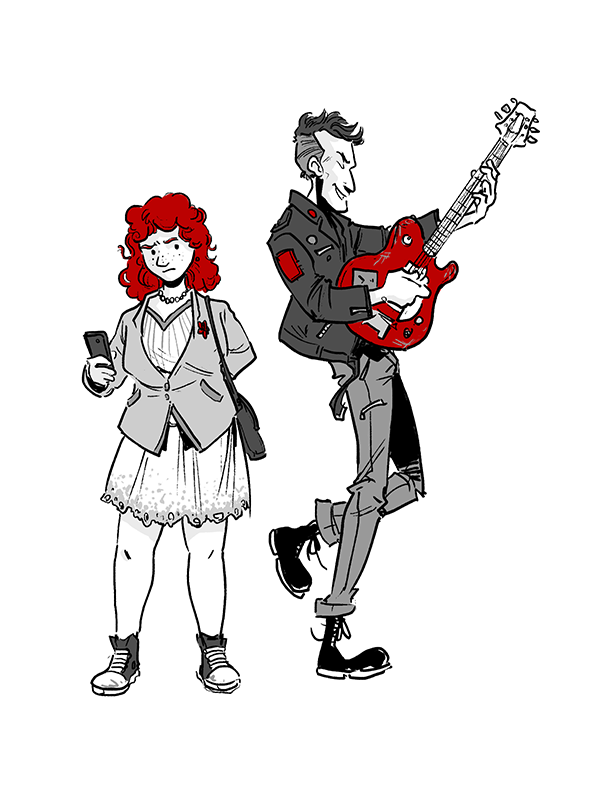
This has been my baby for over a year now, although it used to be called FATHERS, FENDER GUITARS, & OTHER F-WORDS. It’s my young adult contemporary novel,  and it totally rocks. If you’re curious to learn more about it, click on the link above.

carrie-07a


(art of DYS-PUNK-TIONAL characters by Giles)

PROGRESSION: a feature-length narrative film, set in Lawrenceville, the hispter-est neighborhood in Pittsburgh.

From the Website: Dubbed “a gentrification farce,” this film features arty young professionals colliding with the fourth-generation locals who watch bemusedly as their neighborhood transforms under their noses.  This film features three soups, two salads, and culminates in a raucous single entree where secrets are revealed, true love is conceived or destroyed, and a baby is delivered on the dining room table. The filmmakers pay stylistic homage to the great screwball comedies of 1930s American cinema, as well as the mannered farces perfected by French New Wave auteurs.

I am the Marketing and Social Media intern for Progression, and I couldn’t be more thrilled to work on such a cool project! Stay tuned for more!

prog

BROODING YA HERO

photo 2 What began as a procrastinating silly twitter account has morphed into… a silly twitter account used by many people to procrastinate. He’s a cool guy, and far funnier than me. Check him out above, (he’s already been gazing at you with his cerulean, vivid, intense gaze, so you might as well) or find his broken-hearted, lovelorn tweets on @broodingYAhero

SCHOOL

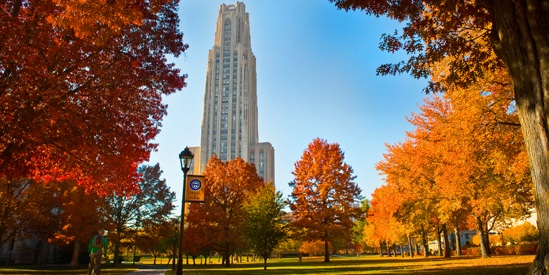
Hail to Pitt! Hail to Grad School! Hail to Coffee!

katzx1

So, those are all the things keeping me busy and mostly out of trouble. What about you, folks? What are you working on?

b785ee1ac45b0db364711ab1e19bf43dcc7709c7c3a0af4eb21bdefc44a5a6e2